Categories
I like doing the boring work, and the work that underlies the shiny things. Often, what’s needed but not top-of-mind is the ability to understand and critique the underlying structures we seldom think to challenge. In that spirit, I want to talk about categories.

We use categories and classifications to flatten the diversity of the world. Flattening the world tends to feel necessary if we want to get things done at large scales. In a bureaucratic process, a form which contains a few pre-determined categories is easier and cheaper to process than a form which allows every question to be answered in any way the form filler desires. Having a list of countries on a drop-down menu prevents me from saying that I live in a country of my own devising, or a country not recognized by the creator of the list. Categories provide utility for the people who are trying to process information, and sometimes for the people being described by the categories (for example, if belonging to a category helps with access to some kind of assistance or recognition). But we occasionally forget that categories are not reality. Categories lose information and complexity in a trade-off designed to make representation possible.
The utility of abstraction
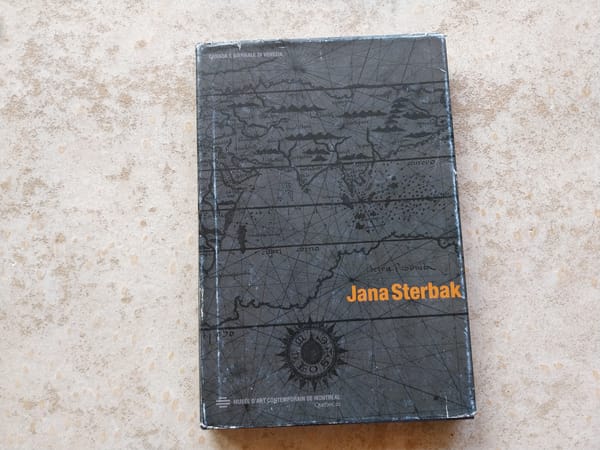
Stop me if you’ve heard this one before (from me, two weeks ago, and also in my book, and basically constantly). Jorge Luis Borges wrote a very short story about cartography. He described the relationship between a map and the territory it represents. The punchline of the story was that the discipline of cartography had to be abandoned after a kingdom’s cartographers became so invested in precision that they ended up making a map as large as the country itself. I bring this story up at the least provocation, because I find it to be one of the finest examples in literature of the trade-offs of representation. A map has value as a representation of a territory. The territory is already there, and is doing the most precise job possible of representing itself at 1:1 scale. Maps, scaled to be smaller than the territory, lose precision compared to the reality of the territory, but gain utility by being smaller, more portable, more accessible, more abstract than the territory itself. A map can represent the information about the territory that is needed for a particular purpose. Elevation maps are one example of this, maps showing national borders are another. Both make selective use of information to provide a picture of the world, based on what the creators of the map find important and want to communicate. They are both interpreting information which is present in the land being shown. In the case of a map with territorial boundaries, the territory is supplemented by information about the political concept of borders. (And let's not talk about different map projections!) They are not just simplifications and abstractions, but they are also acts of deciding which information is relevant or not for a particular purpose.
When we make abstractions of reality, we make decisions about what is in and what is out. If I simplify one way, I can capture one thing, if I simplify a different way, I capture something else. That is the nature of abstraction and representation. That nature is at the base of acts of categorization. When I say “categorization” I also mean things like the creation of taxonomies or grades. All of these are attempts to pin down the butterfly of reality. And it’s necessary! So many things would be unable to happen if we didn’t live inside complex systems of representation, classification, and categorization.
Take my beloved pigeons as an example. At the extreme, without any kind of categorization at all, you’d point at that thing over there and ask what it is, and I’d be unable to respond. Without a distinction between urban pigeon and rock dove, I’d be unable to tell you that it’s a pigeon. Without a distinction between bird and mammal, even that level of specificity would be impossible. Is it an animal? What’s an animal? Even the answer “I don’t know what it is, but I like it” relies on my own subjective and informal classification of the world into things I like and things I don’t like. Without some ability to create abstract differentiations, my ability to say anything about the pigeon is seriously limited. In our daily lives, we may not be immediately bothered or impacted by the Linnaean taxonomy which provides the hierarchical structure for understanding relations between species and which lets us put the pigeon here, and the rock dove there, but there are plenty of other constructed systems of classification and categorization that do have a more immediate bearing.
Categories in action
In my piece on Susan Leigh Star’s “The Ethnography of Infrastructure,” I omitted an example she gives at the very end of the article. She describes the category of “race” on the U.S. Census. She writes: “In the year 2000, for the first time, people may check more than one racial category” (1999, p.389). As she goes on to argue, such a “simple infrastructural change took a march on Washington, years of political activism, and will cost billions of dollars” (ibid). Let’s be clear: this is the ability to tick more than one box on a form. While a national census is the mother of all forms, requiring a high degree of precision and a huge number of respondents in order to be properly representative, the thing requiring huge amounts of mobilization and money to achieve is the act of ticking more than one box in a given category (and all the data entry and information systems that sit behind and after that act). The contested categorization of race on the U.S. Census is not only an artefact of the difficult history of the United States, but also a tool for representation. We’ve seen similar moves in the last decade to change the way gender is handled on any number of forms.
Depending on the application, both of these important but fraught categories are handled in different ways. In small-scale activities where representation of individuals is more important than aggregation of data about large numbers of people, we might see the use of only a fill-in field, allowing respondents to describe themselves as they wish. In other scales of data collection, we might see a bounded set of categories, plus an “Other” or “None of the above” category, potentially accompanied by a write-in field. (I won’t go into “Other” here, but Star has also written very compellingly on this topic.) Whichever choice we make has its own benefits and drawbacks, not least of which is the trade-off between complexity/cost and representation. While it’s not a universal given (which would be ironic in the context of this essay), the more complex the data, the more expensive and difficult the instrument is likely to be in terms of its encoding and use. Offering a write-in field instead of one option on a closed list is not always feasible, but the choice to limit comes with its own difficulties.
The construction of categories
Categories are representations of the world. The delineation of what is in and what is out, or where the lines are drawn, is culturally- and historically-constructed. No matter where you land on the political spectrum, it’s at least possible to acknowledge that, at some point in time, someone had to point at someone else and say “Hey, you’re different from me in [x] way!” even if you think the person who did that was Adam. Humans make categories by trying to find difference and sameness. The difference may be something we observe visually, or it may stem from other distinctions. The creation of categories is something that has been raised to a fine art through Western, Enlightenment-era scientific activities.
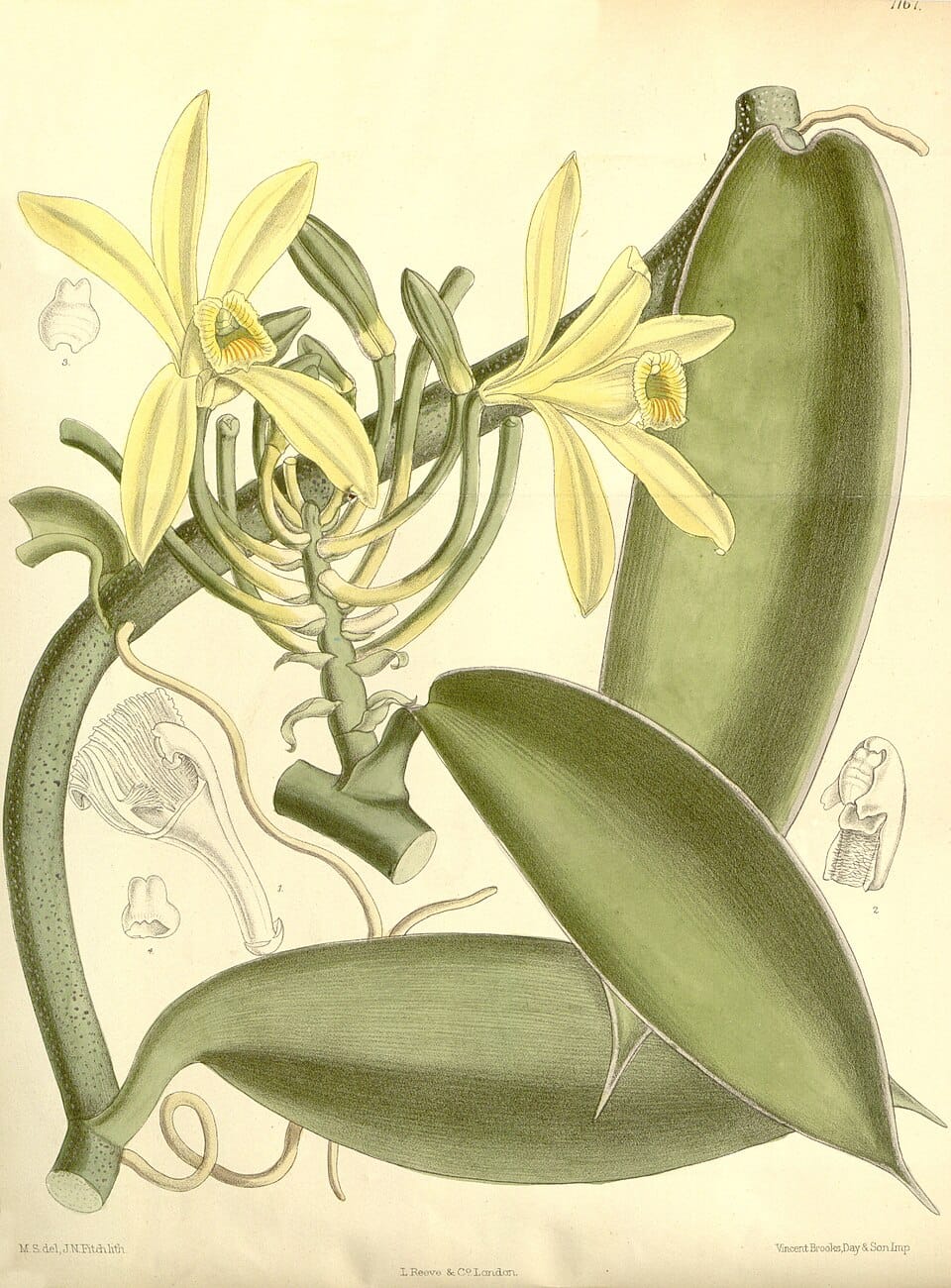
The Linnaean taxonomy from earlier, and indeed, conceptions of rigidly-defined racial difference, both come from the Enlightenment project of rendering the world understandable and catalogue-able. The desire to capture the world’s complexity, record, and categorize it got a huge shot in the arm during the era of scientific exploration. Taxonomies and rule-sets for how they should be populated are important if people want to be able to talk to each other about the things they’re discovering, and if they want to be able to move knowledge around. How can I say I’ve discovered a new kind of orchid if there isn’t a set of agreed rules for differentiating one species of orchid from another? And hell, maybe I’ve discovered ("discovered") an orchid with a really delicious fruit (vanilla, let’s say). There’s now not just a scientific need, but also a commercial impetus to figure out and codify exactly how the orchid I’ve found (or been introduced to by the people living in the place I’m visiting/pillaging, but I digress) differs from other orchids, in terms of not just its deliciousness, but also in terms of its physical characteristics. Description and classification become essential to my ability to stake a claim and make a profit.
Changing categories
An important thing, though, in the classification of plants, is that advances in the way we see the world have also changed the way we understand plant classification. Sure, the fun Latin binomials we know from Linnaeus are still holding strong, but the means of determining relationships between plants has changed, now acknowledging not just that evolution has a role to play in the relationships between species, but also that we can learn more about those relationships through DNA sequencing. So while the binomials of the 18th century may remain, the system has changed.
Which is to say: categories are created by people in order to serve certain purposes. Categories themselves do not exist out in the world, but are instead attempts to abstract the diversity and difference of the world. Categories exist for reasons, and generally because someone, at some point, thinks they are needed. They are not neutral. Many of them – especially those that have not been with us for thousands of year, but only tens or hundreds – were designed to have specific purposes within specific structures which we can still even find and critique. Sometimes they’re ported out of their original contexts or frameworks and are used elsewhere, in ignorance of the purposes designed into them in their original contexts. In instances where their original contexts are based in violence, or in ideas we would now find unacceptable, the categories can still remain in use because they’ve proven useful in places they’ve been ported to.
Often, if these categories have proven enough utility to outlast their original context, they morph, change shape and purpose, and in the eyes of their users, throw off the weights of their history. Through this maturation into de-contextualized matters of fact, categories become things that are “just there,” ways of structuring the world that we don’t question, don’t wonder about, and even naturalize as being how the world is. Untangling our ways of seeing and understanding the world from human-made and historically-loaded categories is an essential step in grasping and challenging structures we may not agree with.
NB: I've made an effort in this essay to go with lighter examples (believe it or not). I've chosen orchids and classification of species instead of something much heavier, like the way categorization supported scientific racism (and continues to support its still-present ghost). It's very difficult to talk about categorization without very quickly descending into some truly awful depths, but for this first call-to-arms to notice categories, I wanted to keep things a little chill.

_pl_7167_(1891).jpg)