Friday bonus: On not capitalizing my name
A brief explanation of the choice to not capitalize my name, where it came from, and what it means to be a common noun instead of a proper noun.

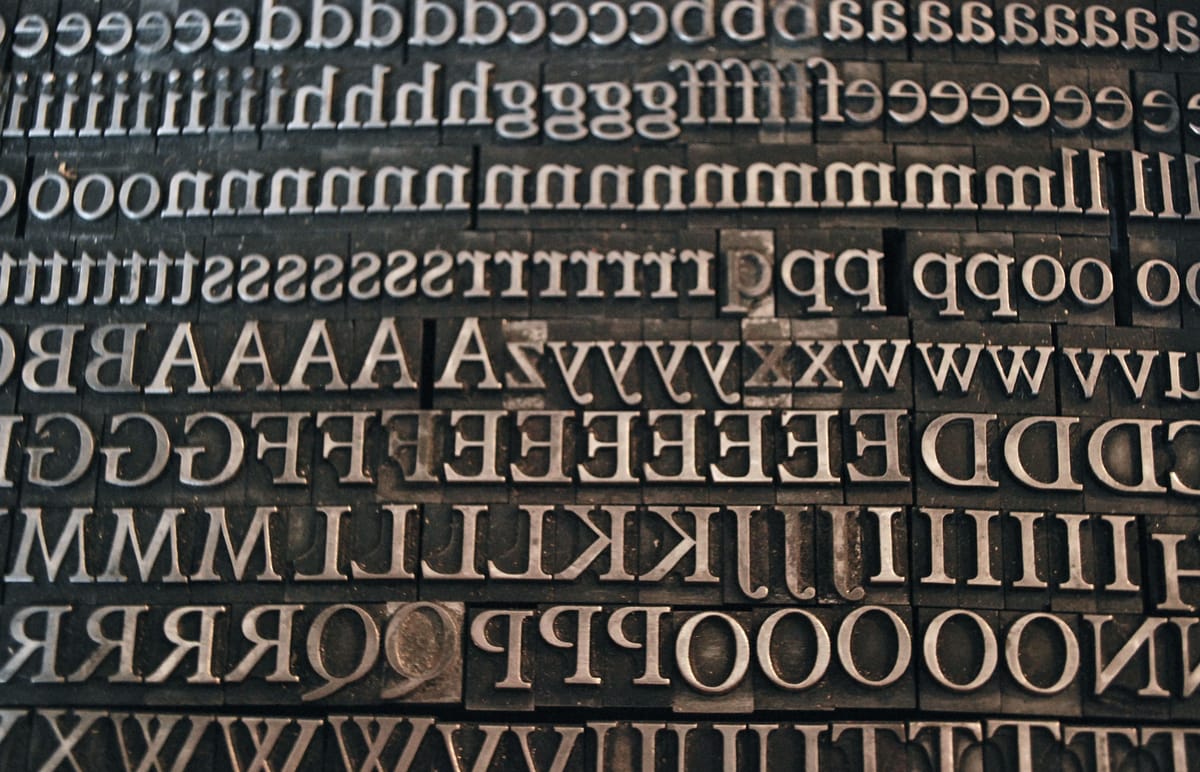
This week’s little Friday post is about my name. It’s neither laziness nor style that leads it to show up as “ginger coons” instead of the more conventional “Ginger Coons.” Instead, it’s a commitment to non-capitalization. Where does that commitment come from?
Until I was eighteen, the only languages I’d ever learned were English and French. When I started university, I decided to take a German class. This opened me up to something I hadn’t realized before: different languages handle the distinction between proper nouns and common nouns in different ways. In both English and French, proper nouns (a person’s name, or the name of a specific thing) get initial capital letters. So you have Earth, the CN Tower, Toronto, or Ginger. Things that don’t have the specificity of a proper noun attributed to them – common nouns – don’t get initial capitals. It was only when I started learning German, which capitalized all nouns, that the distinction between proper nouns and common nouns in English and French suddenly became de-naturalized for me.
At that point, I decided I wanted to be a common noun, not a proper noun. The crunchy hippy in me didn’t want to distinguish between myself and grass, water, or soil. I wanted to be aligned with the things that didn’t get allocated initial capitals, instead of the things that were judged as deserving of initial capitals. That decision has stuck with me, and at this point, I've been treating my name like a common noun for something like half my life.
There are intricacies and points for discussion, of course. One could argue that I’m making myself more special than other individualized and named humans by forcing a non-conventional spelling of my name. And making it work with grammar can be interesting, forcing the re-configuration of sentences to reduce ambiguity. Most fun of all is that, because this decision is about the different ways of handling initial capitalization of nouns in different languages, the capitalization of my name then varies on a language-by-language basis. But Friday posts are short posts, so let’s not go there today.