The jammer is the ball: Learning about community from roller derby
Roller derby (a team sport on roller skates) is embedded in a culture of self-organization, inclusion, and openness. What can other values-led communities learn from a sport that's made a virtue of inclusion?

It’s no secret that I enjoy being involved in niche things. Today, I bring you one of the finest niche things I know: roller derby. I’ll wait while you look up a video. It may seem at first that writing about roller derby is a bit of a departure from the usual territory – after all, it’s not about technology, which is very much the core of my subject matter. But it’s really not so far off. Roller derby is a fine example of a community of practice which has internal culture and does self-organization well, balancing structure, representation, and the usual inter-personal politics. It does these things at multiple scales, while being a totally volunteer-run sport.
In short, roller derby has some lessons it can teach about doing sophisticated, cross-context, multi-national, interoperable collaboration between diverse parties. Basically, roller derby isn’t very far off from things like community-run software projects, if you ignore that it’s a sport instead of code. But don’t worry – I’m not going to go all organizational studies on you. Instead of leaning too heavily on community organization and structural learnings from roller derby, I want to talk about how members of roller derby communities bring the un-initiated into their world. I’ve been on a bit of a “selling ethical software to new people” kick lately, and looking at practices in another, slightly different community- and values-led space, offers another way of looking at how to wrap ethics in enjoyment.
But WTEver-LovingF is it? (And then we explain)
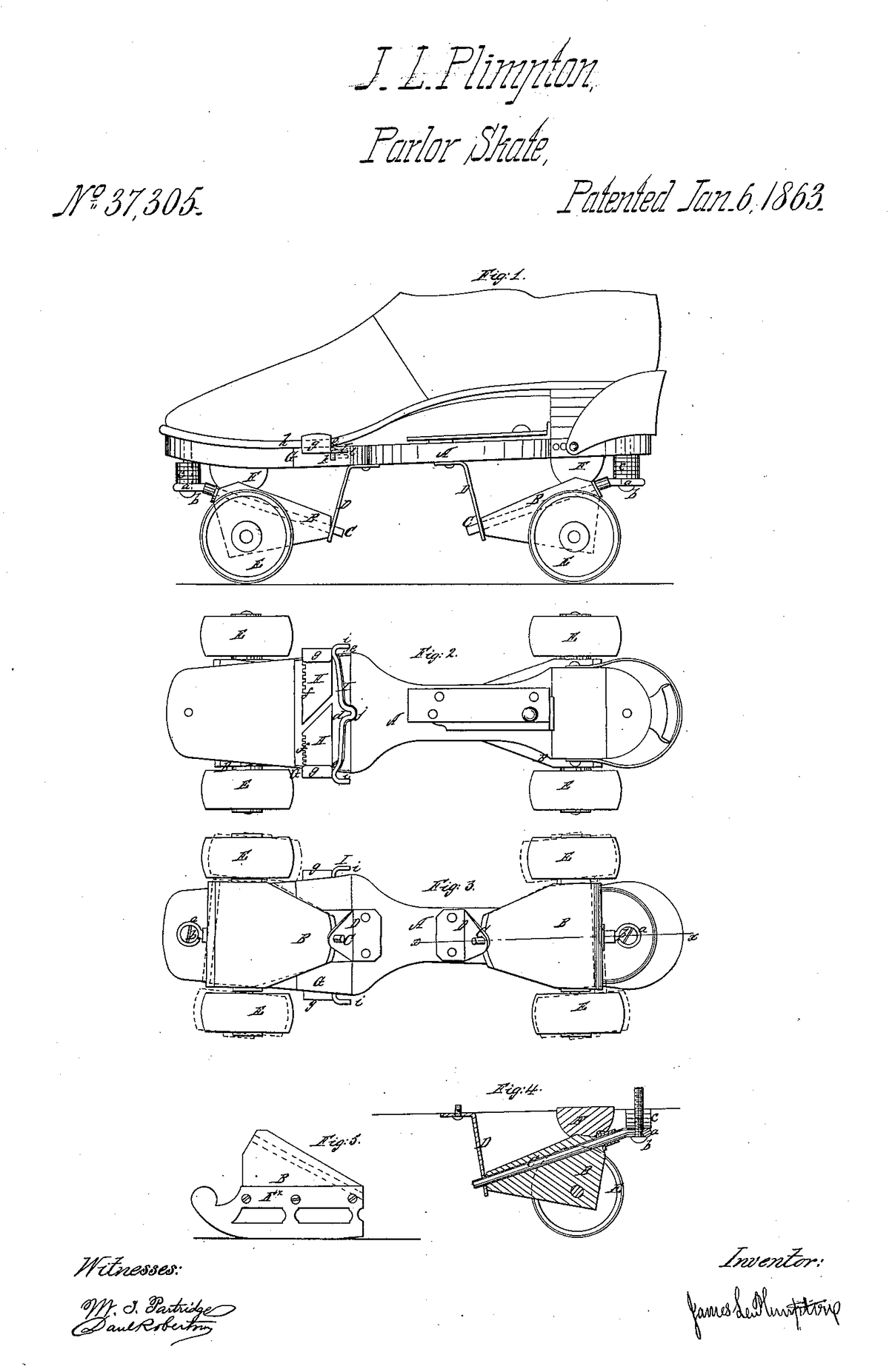
First, you need to know some things about roller derby. It’s a full-contact sport, played on quad roller skates – the kind with the two parallel sets of wheels. The basic premise is that two teams are skating in circles around a (flat) track, trying to get more points than each other. The players are allowed to make physical contact with each other in certain defined, legal ways, and get penalized for (among other illegal actions) making contact in ways that are not permitted. Points are scored when a designated player (called the jammer, wearing a cover on their helmet which has a star on it to designate their status) on the team passes players on the other team. In effect, while many sports have a model in which points are scored by getting a projectile into a goal, in roller derby, the jammer is the ball. I’ll come back to this concept later, because it’s one of the (many) inside jokes that contributes to social cohesion in the sport. Basically, it’s a sport where each team is simultaneously playing offence and defence, trying to get their own jammer through the other team’s players while preventing the opposing jammer from doing the same. There’s a lot more nuance, and a lot of rules and procedures, but this is the basis of the exercise.
One of the things I find most interesting about roller derby (particularly in the European context – things are a little different in, for example, the United States) is that, because it’s not necessarily widely-known, it has a real culture of clear explanation. It’s common, at a game, to encounter people who have never seen the sport before, but have come along to support a friend or family member. This often results in a crowd-sourced explanation of the game and its rules from surrounding, previously-indoctrinated spectators.
An example: In the stands of a recent double-header (two games in a day), I was sitting with two other already-in people. Both were players of the sport, but also involved in doing other things like officiating (enforcing the rules, making the game run correctly) and announcing. I don’t play, but am involved in roles that don’t require me to skate. From behind us, we heard some puzzlement, some questions being asked about who was who on the track, and what was happening. In this scenario, it is impossible to not turn around and offer help. We began to explain the basics. The people behind us were friends of a friend of one of the players on track, coming along to a sport they’d never experienced before (and indeed, hadn't previously heard of) because it seemed like a fun thing to do on a Saturday afternoon. They started the day knowing basically nothing about roller derby, and left with knowledge of the game and its culture (and with information on how to find out about other matches).
We don't yell at children
It’s not just that there’s a desire to welcome people into the niche by educating them on the way the sport works. It’s a culture of inclusion. Unlike many professional sports, roller derby is run by its participants. Its governing bodies are are made up of players and others who habitually participate in the game. There are no highly-paid executives at the top of a rich organization. Instead, there are committees growing up from the grass roots, with people volunteering their time, effort, and skills.
It is also an inclusive sport: there is no one right body type for a player, using the right pronouns is a priority, and outside of Pride, you’re unlikely to find a more queer-friendly group of people anywhere. At high-level events, inclusive and safe values are also entrenched with codes of conduct for participants, and with clear lines of communication for reporting things that don’t feel okay. It’s perfectly usual to speak up if something violates the code of conduct, and though it’s not inherently pleasant, activities like mediation are not unusual. The safety of participants is seen as a priority, and enforcement is not taboo. I witnessed this at the Junior Roller Derby World Cup a few years ago, in which poor behaviour by parents, very common in other (junior) sports, resulted in ejection from the venue. In roller derby in general, hurling abuse at others is not acceptable. And though it seems wild to have to say this overtly, in Junior-level derby, yelling at players (who are all legal minors) and officials is an ejectable offence.
Enforcement of a code of conduct may seem like heavy subject matter. But this kind of decision is at the core of allowing the community to be safe and inclusive. Roller derby is radical at its heart, even as it slowly gains a higher profile, a higher degree of polish and moves slightly away (at least on a visual level) from some of its more riot grrl-style roots. Procedural instruments like codes of conduct and clear paths for filing complaints or seeking action provide the teeth necessary to ensure that safety stays a priority.
The jammer is the ball
Most people who have been around roller derby for a while have their own way of explaining the sport. You can see the motor turning over in their heads when they meet someone who admits to having never heard of derby before. In this way, roller derby is like any other niche hobby or lifestyle choice: you come up with a script that lets you quickly cover the important parts, getting your interlocutor to the interesting bits as efficiently as possible. The script varies per person, and is formed both in relation to their own experiences in the sport and the community, but also in relation to the questions or misunderstandings they’ve encountered before. This is where the ball comes in.
Most popular team sports have a ball. Football (or soccer), rugby, baseball, basketball, cricket. Even the other rollerskate-based sport people might know, roller hockey, has a ball. So when the explanation of roller derby comes around, the question “Is there a ball?” is a pretty natural one to ask. But as we established earlier, there is no ball, only a player with a star on their helmet cover who scores points by passing opposing players. This has led to one of the best dad jokes in roller derby: the jammer is the ball. I have no idea where this joke originates from, who originally coined it, or how it has trickled through the collective consciousness. But the jammer is the ball. I think we all say this, the moment someone asks if there’s a ball, or even before, when trying to make a connection to better-known sports.
There is a combination of evangelical zeal and inclusive softness at the heart of roller derby. So many people do it because they absolutely love it. They devote evenings and weekends to it, and those who are extra-invested tend not to be shy about saying so. But unlike more mainstream sports, there is a knowledge that not everyone feels this way. It is not football. The grocery store does not turn flag-coloured when the world cup happens. People involved in roller derby will be pleasantly surprised if it turns out that you've ever even heard of their sport. It's a sport that's marginal, but strong. The comparatively small size of the sport helps with encouraging affinity and connection, while the norms of inclusion and openness – supported by global-level agreements on procedure – make it feel safe to drop into a roller derby event anywhere and believe that it will be a welcoming place.
Learning from derby
To the best of my knowledge, roller derby hasn't asked to be a lesson for others. It is contentedly doing its own thing, off in its corner, with its own wonderful in-fights and controversies, its own delights and pain-points. But off my own bat, I'd like to point out some things that others could profitably learn from what derby has achieved in the twenty-odd years of its modern existence (anything that happened before 2004 does not fall under the same rubric and does not reflect what I've written above – but this is a story for another day).
Privileging inclusion and safety feels like it should be basic, but isn't in most communities, or even formal organizations. It's one thing to say that inclusion and safety are important, and another to make rules and provide structures that enforce those values. These structures do not come easily, and no one should expect that they will. When a large group of people with minutely-differing opinions, and potentially significantly different backgrounds, are trying to make cohesive rules together, discussion and disagreement are inevitable. But effort, commitment to process, and a willingness to adhere to the structures once they exist (or to challenge them productively, rather than just ignoring them), give force to things that would otherwise be abstract values.
Next, inclusion needs to be seen not just as a principle, but as an action. If someone walks through your door, make them welcome. There is no "Read The Flipping Manual" in roller derby – enthused people want you to feel enthused, and there's time for rules and procedures once you've been brought into the fold. Gatekeeping is for people who don't want to make new friends.
Finally, there's power in the niche. The belief that things need to be huge to be good ignores the possibilities that come from enthusiastic and committed groups of a smaller size. Who cares about being huge and all-encompassing when you can be niche, wonderful, and inclusive? Small, community-based, and grass-roots have the power to be accessible and inclusive in a way that big and commercialized can never hope to achieve. The marvel of roller derby is that small and grass-roots manage to coexist with global, highly-distributed, and well-organized.