Bookpile 11: The Birth of Computer Vision
Bookpile is short posts on Fridays about what I’m reading now and what I’m liking about it. This week, The Birth of Computer Vision by James E. Dobson.

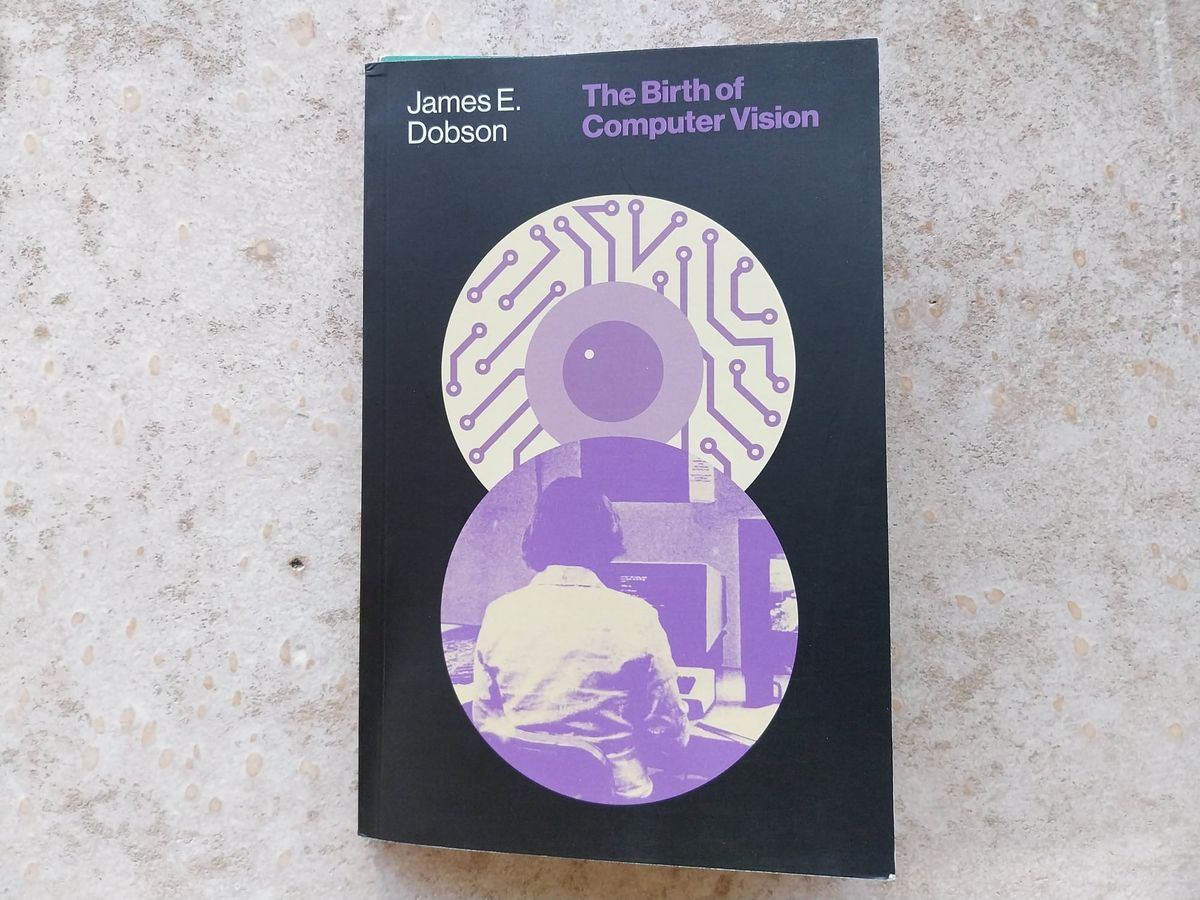
It's been a while since my last proper bookpile post. Sure, I've been reading documents from the European Commission, and listening to old Massey Lectures, but actual books have been in short supply around here. Finally, though, I'm back to having my nose in a book. That book is James E. Dobson's The Birth of Computer Vision (over on Mastodon, I referred to it as "a banger").
Dobson has chosen a small number of milestones in the early history of computer vision and has archival-researched the heck out of them. In taking examples like the Perceptron, Dobson tells the story not only of conceptual and technical choices in the early years of computer vision (which continue to be embedded in systems used today), but also of the close relationship of those early CV and machine learning researchers to the US military and its goals. It's a fine balance: the technical doesn't outweigh the socio-political, and vice versa. This is important, because in much of the book, Dobson is presenting the lineage of many computational methods still in widespread use today. Being able to satisfy the need for precision in discussing their technical aspects is essential in arguing the importance of their ideological and conceptual underpinnings.
It's a complicated book – easy to read, because Dobson is a very nice writer, but easy to need to re-read, because of the sheer density of concepts. The flow of the individual sentences and paragraphs, the assembly of the language makes for deceptively quick progress, until you reach the end of a paragraph and try to recall what was in it. This is arguably a feature, not a bug. Technical developments in the history of computer vision are easy to gloss over without understanding, or to take at a high level, without really grasping the mechanics. Dobson has managed to tell a story that blends together actual explanations of how certain algorithms work, alongside the relationships and scientific lineages of the people and organizations behind technologies, and the current inheritors of those concepts.