Bookpile 13: Imagination: A Manifesto
Bookpile is short posts on Fridays (though this time it's a Saturday) about what I’m reading now and what I’m liking about it. This week, it’s Imagination: A Manifesto, a call to action by Ruha Benjamin.

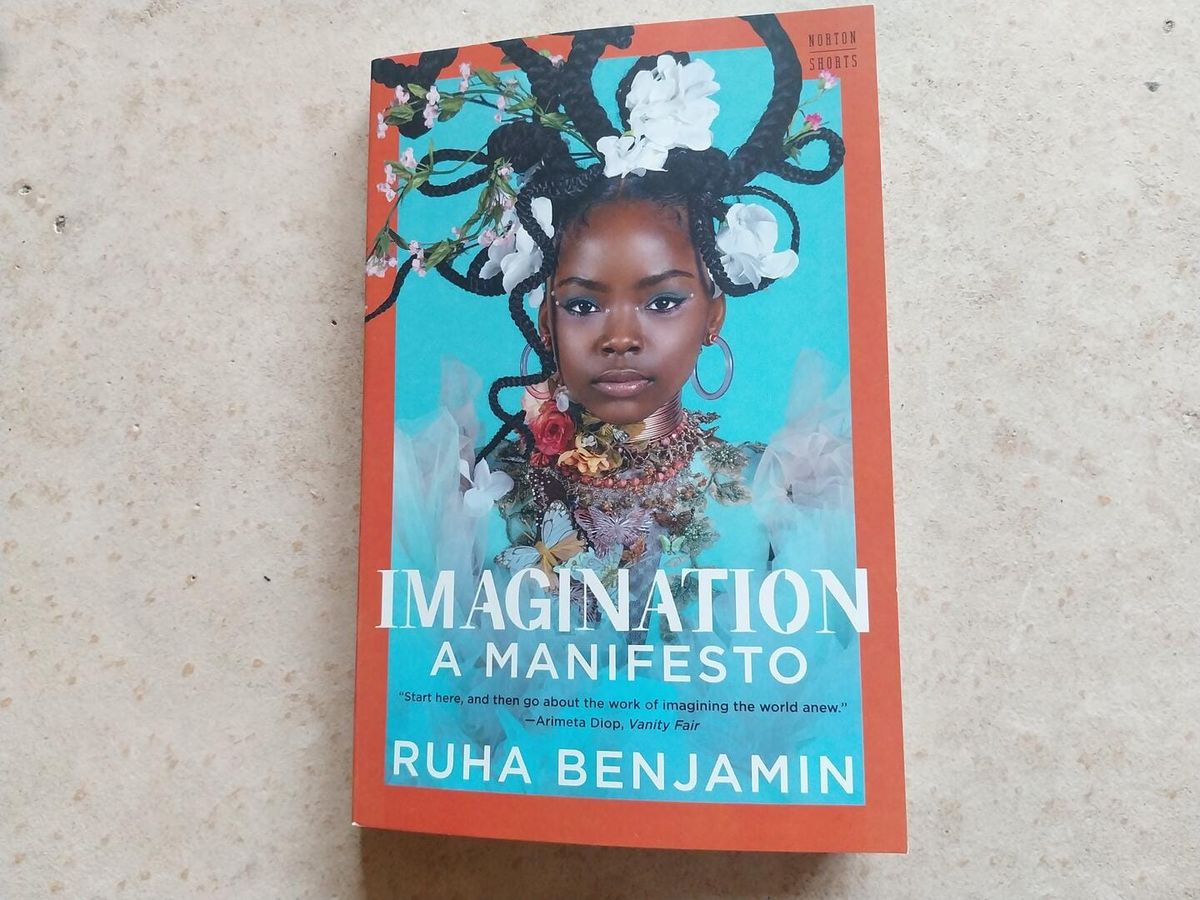
I will not call Ruha Benjamin's 2024 book Imagination: A Manifesto short and sweet, because it is instead short and wonderfully and righteously on the tear. Excluding the appendices and notes, it's a slim 135 pages, and written to be read by anyone, which it very much should be. This being bookpile, I'm about half-way through at the moment, having enjoyed and been positively provoked by every page so far.
Benjamin is asking us to reckon with the world we live in, with the dominant imaginaries we are subjected to, and with the way those imaginaries disproportionately punish and disadvantage certain groups, especially people of colour. This is another one of those good synthesis books, where many important threads in the Zeitgeist are skilfully put together to support a compelling argument. It's a wonderful and accessible synthesis of the state of thought and scholarship on how we live in societies which dampen the exercise of humanity, morals, and positive collective imaginaries. Every other paragraph, I have to stop and make a note of something Benjamin mentions offhand, which I should've read ages ago but haven't gotten around to.
Beyond being an excellent synthesis of things like how certain education systems disadvantage and penalize particular groups of students, or how we live with internalized eugenic imaginaries, this book is also a powerful rallying cry. As Benjamin puts it towards the end of the introductory chapter, the aim of the book is to "[seed] an imagination grounded in solidarity, in which our underlying interdependence as a species and with the rest of the planet is reflected back at us in our institutions and social relationships" (p.8). Benjamin grounds this goal throughout the first part of the book in explaining the structures we're living with and how they serve to dampen our capacity for collective imagination. Peeking ahead towards the end, it looks like the reader doesn't get left hanging with only the problem: Benjamin provides some training in learning to imagine again. I think a lot of us need that right now.
I'll end with one more passage that stuck out at me with particular force. Benjamin asks:
"Why can we imagine growing heart cells from scratch in a lab, but not growing empathy for other human beings in our everyday lives, and even more so in our institutions?" (p.40)
Effing right.