Bookpile 16: Brave New World
Bookpile is short posts (usually on Fridays) about what I’m reading now and what I’m liking about it. This week, it’s Brave New World, by Aldous Huxley.

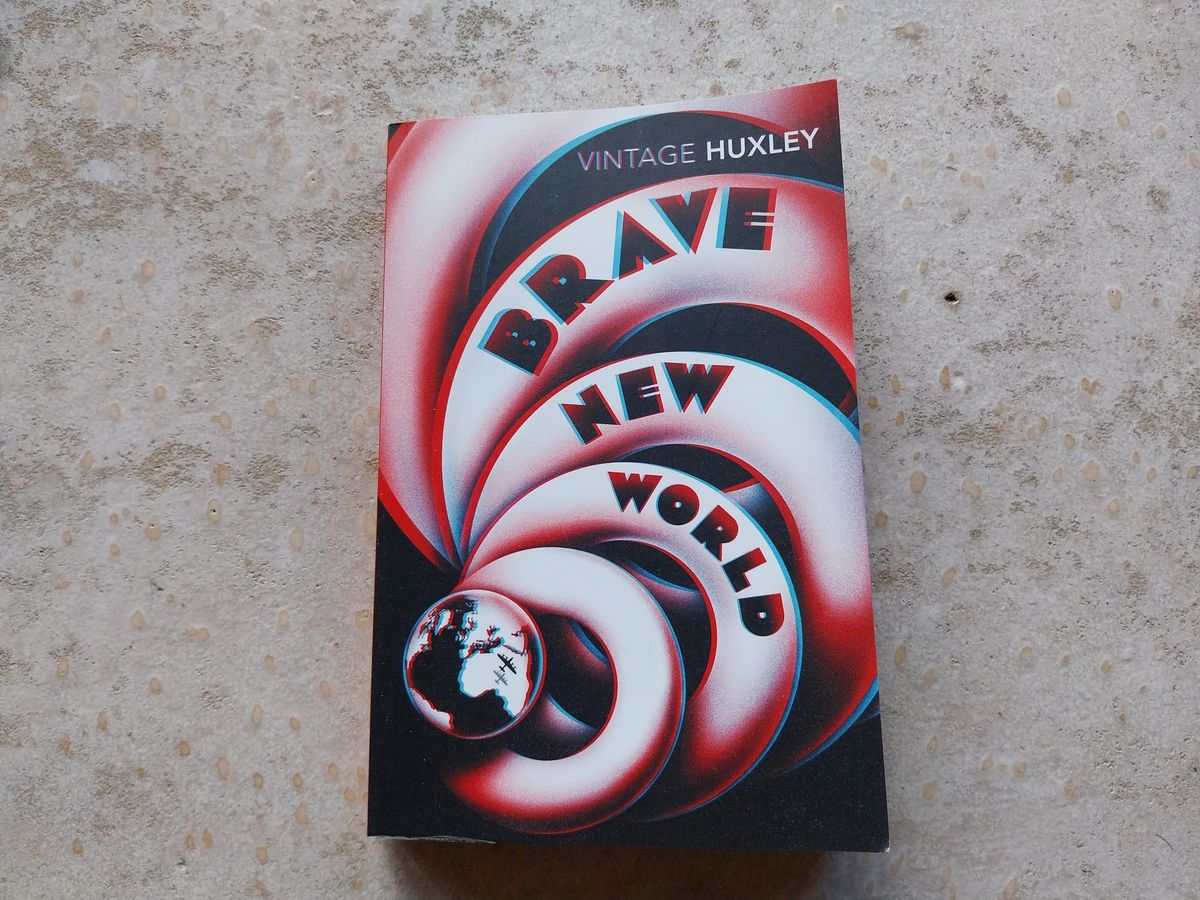
Brave New World is another recent read that falls under the rubric of books I've wanted to get around to for years, but somehow haven't. I've tried a couple of times, and was put off by the sexual and gender politics, which haven't aged very well. Like much fiction of its time, the positionality of the book is pretty one-sidedly male, with female characters acting mostly as plot devices with little inner life. It definitely doesn't pass the Bechdel test so far (though I have about 50 pages left to read, so who knows – but I doubt it).
Why am I reading this thing now? In a word, Ford. My current deep dive into the nuts and bolts (I'll see myself out) of the Ford Motor Company's history is leading me down some strange paths. Brave New World is one of them. If you haven't read it, one of the through-lines of the book is that Fordism is the world religion, and Henry Ford a sort of messiah. Because I'm deep in Ford-world at the moment, I find myself reading Brave New World through that lens. That undeniably makes it more palatable, as I get to pick at small irritations like the existence of a factory on the outskirts of London which hygienically produces cow milk – Ford would not have approved, being very anti-cow and pro-soybean.
What am I enjoying about Brave New World? To be honest, mostly just having context for cultural touchpoints. Being able to understand the properties of soma better is useful for reading things that have come after and referenced it. As social commentary, it sits in its time. While it may have lessons to teach, given that most science fiction has at least a layer of political commentary, there are other places to get those lessons. It's nice to have some filling-in of a bit of the 20th century English cultural canon, and that's about what I'll give it.