The port
Rotterdam is defined by its port, one of the largest in the world. What does it mean for a city to be so closely entangled with global shipping?

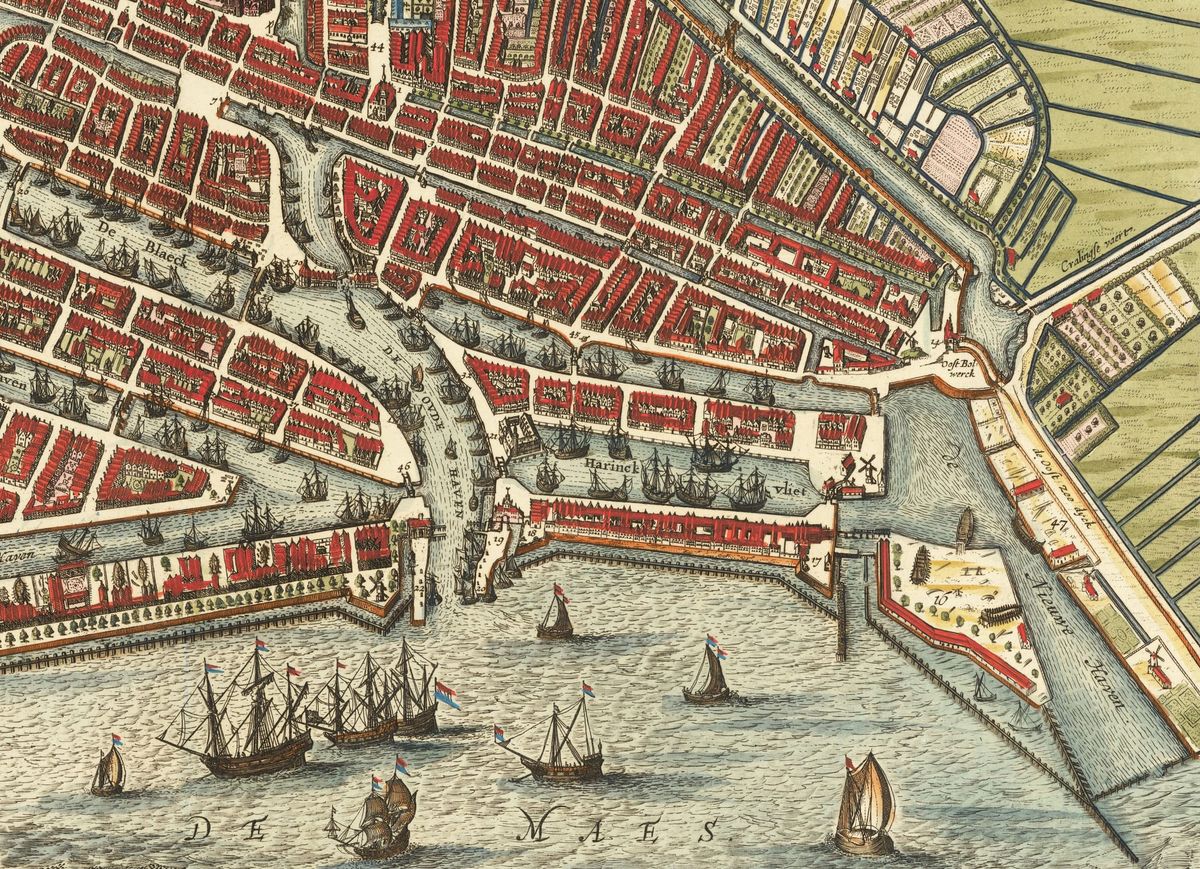
Rotterdam has the biggest port in Europe, in terms of throughput. The port has grown over the years, both in traffic and in land area. Quite a lot of it is now located a little out of town – still in Rotterdam the municipality, but not really in Rotterdam the city. A lot of it, though, is still in the city, tucked and nestled into harbours along the Meuse river, sometimes isolated, sometimes cheek-by-jowl with the places people live.
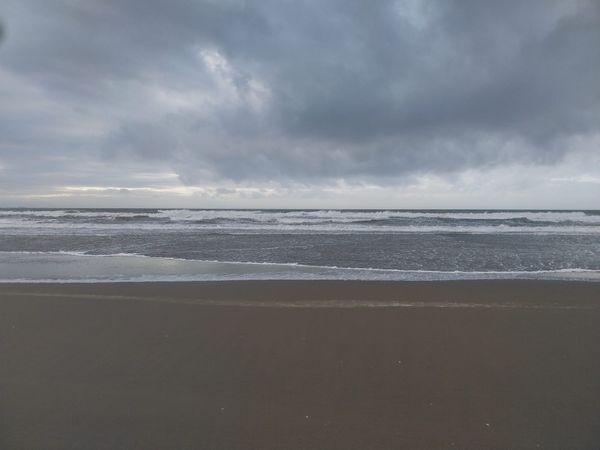
You can take the subway out to the North Sea. If you walk straight out of the station, across the street, and still straight ahead onto the beach, turning ninety degrees to your left will yield a view of the modern port area at Maasvlakte. That’s the port outside the city. It’s the port in Hook of Holland, just down from where the passenger and truck ferries to and from England arrive and depart. The port at Maasvlakte is huge in scale, with the comparatively new Maasvlakte 2 extension covering an area of more than 2000 hectares of former sea. It is large, and plays a big part in Rotterdam’s role as the biggest port in Europe. It fronts onto the North Sea, lending an other-worldly feel to beach visits.
The port that’s still in the city is also expansive. Rotterdam, being bifurcated by the Meuse (which in Dutch is called the Maas, from which Massvlakte gets its name), is very much a city defined by its river. While concepts of east and west do matter geographically, the sociological division that most defines the place is whether one is north or south of the river. The river is crossed by bridges and undercut by tunnels. The port still lies on both sides, but the largest concentration of it is in the south, still industrial, sometimes looming over housing, sometimes safely tucked away where it’s harder to see. But it is hard to hide a port. And the port is still everywhere.
There is a neighbourhood called Merwe-Vierhavens. It is in the process of changing, of becoming less port. It is to the north of the river, in the west. Not as far west as Hook of Holland and Maasvlakte, but as far west as you can go before running into the boundary of another municipality which breaks Rotterdam’s contiguousness on the north side of the river. Merwe-Vierhavens (or M4H, as it is now styled) still houses port facilities. Fruit and juice are still shipped through warehouses and docks in the area, and a huge cold storage facility exclusively for fruit juices and pulps is still present, looming behind a tall fence and largely blocking the water off from the street for a long stretch. A massive juice tanker flying under the Liberian flag is a frequent presence at the cold storage facility, huge and visible through the fence. This is neither a joke nor an exaggeration: it is called the Orange Wave, and at time of writing, online ship trackers had it placed at dock in the Merwe-Vierhavens, having travelled a week or two ago from the port of Avonmouth in the UK.
Port infrastructure like the cold storage facility, right in the city, sits alongside what the North American in me still wants to call big box stores, even though a stretch of them are thoughtfully roofed with a large park. It is possible in the summer to essentially have a barbeque on the roof of a massive pet and garden supply store, though there are admittedly layers of parking garage, soil, and who knows what else in between. This is the kind of thing that now lives next to the port. The strange big box mall lies across the street from the cold storage facility, and the other things in M4H that are what happens in the redevelopment of industrial areas: a rock climbing gym, a large but still somehow cool bakery, a beloved local brewery, an event space, artists. In a new master plan for the area, housing will be built. The port in this area will become even less port.
Rotterdam’s port is an increasingly contemporary beast. The most recent annual report of the port authority stresses corporate social responsibility, sustainability, electrification of dockside infrastructure (to decrease the use of ship motors and generators, and thus reduce air pollution in the city). There is a page about a pilot program using donkeys to control sea buckthorn along a corridor of land under which pipelines run. Seriously. The donkeys join cattle who are already grazing the area, providing a service to the port by keeping sharp plants short. The report details the contributions the port makes to the city, its role as a good employer, and its contributions to the national economy (2.1% of Dutch GDP apparently comes from activities in the port of Rotterdam). It is slightly baffling to think in these terms, to imagine that an assignable percentage of a country’s entire gross domestic product, and a percentage greater than one, can be assigned to the port, that thing behind fences, those cranes.
In the years I have lived in this city, only one has been spent outside auditory range of some part of the port. The sound of an occasional ship horn in the night is normal, as is the sight of container ships cruising down the river. Residential neighbourhoods old and new have close and apparently natural relationships to the port. A customs ship docked at the harbour wall while its crew visit the local grocery store to buy lunch is as ordinary a sight as a police car doing the same. It amazes me how unremarkable this now feels. When I was newer in this city, living in the south, in a funny little pocket of semi-historic Dutch village tucked between port, highway, river, and oil refinery, I found it stranger. It was unsettling to see customs enforcement vehicles more often than I saw police cars. It felt unusual to be so integrated, as a garden variety resident, into the administrative and enforcement infrastructure of one of the largest ports in the world.
As I have become inured to the strangeness, it now takes far more to make me see the uncanny in the port. The encroachment of more extreme surveillance into residential neighbourhoods, on the justification that it is ships being monitored, and residents are merely collateral, wakes me from my complacency. After all, this is a port that is also playing an extremely vigorous games of cat and mouse with drug traffickers who want to use its excellent infrastructure to the same advantage as legitimate goods importers do. It is not only the synthetic drug labs in the countryside that lead to the word "narcostate" being increasingly thrown around to describe the trajectory of the Netherlands – Rotterdam has been a hotbed of drug smuggling for an extended period of time. Slowly, as surveillance increases, as policing of the port and efforts to mitigate the penetration of gangs into its workforce make minor inroads, the bubble in the wallpaper becomes slightly smoothed here and moves very marginally elsewhere, with some activities heading to other European ports, like Hamburg. The jocular agents getting off the customs patrol ship to buy their lunch are part of the apparatus. The informative signs letting me know about increased surveillance are another. The city is integrated into the port.
On a daily basis, the role of Rotterdam as a city that receives goods from the world and spreads them out around Europe is made both obvious and mundane. I text a photo of a coal barge to a colleague as a way of explaining why I’ll be late for our meeting – the barge going through necessitated the opening of a bridge, stalling my progress through the city. It is a normal, boring excuse. Some bridges have poetry on their under-sides, giving the queues of motorists, cyclists, and pedestrians something charming and cultural to read while waiting for the bridge to fold down again. The annual report of the port authority explains a discrepancy between the number of containers transferred through the port in 2025 and their comparatively light total tonnage: Europeans are consuming again, leading to large numbers of inward shipments, and more empty containers heading back to Asia. The containers come to Rotterdam on enormous ships (like the famous Ever Given which blocked the Suez Canal, itself on the way to Rotterdam), are unloaded onto trucks and trains, and make their way around the continent.
It’s a strange sensation, effectively living in a port. The geographical spread of the port, the tentacles of the port, mean that it is not just the high-tech Maasvlakte 2 that is touched by the shipping industry, but everything within reach of the river and its cut-out harbours. Whole neighbourhoods have the jutting, rib-like structure of those harbours. If and when the entire operation ever moves out to the edge of the sea, the city will still bear the topography of the port. As in other historic port cities, the action may move, but the physical influence remains.